Filter by
Found 1 from your keywords: subject="Work-life balance"
# Debug Box
/var/www/htdocs/pustaka-digital/lib/SearchEngine/SearchBiblioEngine.php:688 "Search Engine Debug 🔎 🪲"
Engine Type ⚙️: "SLiMS\SearchEngine\SearchBiblioEngine"
SQL ⚙️: array:2 [
  "count" => "select count(sb.biblio_id) from search_biblio as sb where sb.opac_hide=0 and ((match (sb.topic) against (:subject in boolean mode)))"
  "query" => "select sb.biblio_id, sb.title, sb.author, sb.topic, sb.image, sb.isbn_issn, sb.publisher, sb.publish_place, sb.publish_year, sb.labels, sb.input_date, sb.edition, sb.collation, sb.series_title, sb.call_number from search_biblio as sb where sb.opac_hide=0 and ((match (sb.topic) against (:subject in boolean mode))) order by sb.last_update desc limit 10 offset 0"
]
Bind Value ⚒️: array:1 [
  ":subject" => "'+\"Work-life balance\"'"
]
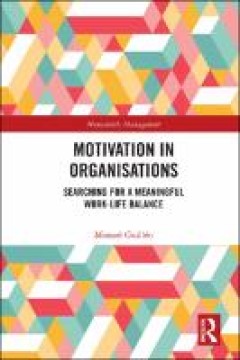
Motivation in organisations: searching for a meaningful work-life balance
Motivation in Organisations: Searching for a Meaningful Work-Life Balance extends the current motivation models in business education to include motives of human behaviour that have been neglected for decades. It debunks some of the myths about human motivation (self-interest as the dominant factor, amorality and non-spirituality) and explains why this approach to teaching business is erroneous…
- Edition
- -
- ISBN/ISSN
- 9780429317293
- Collation
- xxii, 232p.: ill.
- Series Title
- Humanistic management
- Call Number
- 658.314 GUI m
 Computer Science, Information & General Works
  Philosophy & Psychology
  Religion
  Social Sciences
  Language
  Pure Science
  Applied Sciences
  Art & Recreation
  Literature
  History & Geography