Filter by
# Debug Box
/var/www/htdocs/pustaka-digital/lib/SearchEngine/SearchBiblioEngine.php:688 "Search Engine Debug 🔎 🪲"
Engine Type ⚙️: "SLiMS\SearchEngine\SearchBiblioEngine"
SQL ⚙️: array:2 [
  "count" => "select count(sb.biblio_id) from search_biblio as sb where sb.opac_hide=0 and ((match (sb.topic) against (:subject in boolean mode)))"
  "query" => "select sb.biblio_id, sb.title, sb.author, sb.topic, sb.image, sb.isbn_issn, sb.publisher, sb.publish_place, sb.publish_year, sb.labels, sb.input_date, sb.edition, sb.collation, sb.series_title, sb.call_number from search_biblio as sb where sb.opac_hide=0 and ((match (sb.topic) against (:subject in boolean mode))) order by sb.last_update desc limit 10 offset 0"
]
Bind Value ⚒️: array:1 [
  ":subject" => "'+\"modernism\"'"
]

Mental life of modernism: why poetry, painting, and music changed at the turn…
An argument that Modernism is a cognitive phenomenon rather than a cultural one.\r\n\r\nAt the beginning of the twentieth century, poetry, music, and painting all underwent a sea change. Poetry abandoned rhyme and meter; music ceased to be tonally centered; and painting no longer aimed at faithful representation. These artistic developments have been attributed to cultural factors ranging from …
- Edition
- -
- ISBN/ISSN
- 9780262043496
- Collation
- xii, 226 pages : illustrations ; 24 cm
- Series Title
- -
- Call Number
- 700.19 KEY m
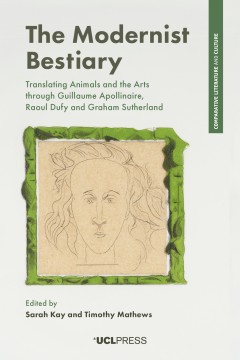
The modernist bestiary : translating animals and the arts through Guillaume A…
The Modernist Bestiary centres on Le Bestiaire ou Cortège d’Orphée (1911), a multimedia collaborative work by French-Polish poet Guillaume Apollinaire and French artist Raoul Dufy, and its homonym, The Bestiary or Procession of Orpheus (1979), by British artist Graham Sutherland. Rather than reconstructing the lineage of these two compositions, the book uncovers the aesthetic and intellectu…
- Edition
- -
- ISBN/ISSN
- 9781787351516
- Collation
- xiii, 186p.; ill.
- Series Title
- -
- Call Number
- 704.9432 MOD d
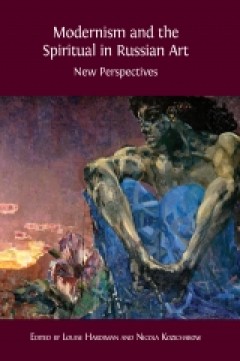
Modernism and the spiritual in russian art: new perspectives
Introduction: Modernism and the Spiritual in Russian Art Louise Hardiman and Nicola Kozicharow In an extended introductory essay, the editors briefly examine the significant role played by spiritual themes in the history of modernism and provide a chronological overview of the history of spiritual and religious themes in the development of Russian and early Soviet art. The main themes of the …
- Edition
- -
- ISBN/ISSN
- 9781783743407
- Collation
- 299 p.
- Series Title
- -
- Call Number
- 709.4709034 NIC m
 Computer Science, Information & General Works
  Philosophy & Psychology
  Religion
  Social Sciences
  Language
  Pure Science
  Applied Sciences
  Art & Recreation
  Literature
  History & Geography