Filter by
Found 1 from your keywords: author=Belikian, Les
# Debug Box
/var/www/htdocs/pustaka-digital/lib/SearchEngine/SearchBiblioEngine.php:688 "Search Engine Debug 🔎 🪲"
Engine Type ⚙️: "SLiMS\SearchEngine\SearchBiblioEngine"
SQL ⚙️: array:2 [
  "count" => "select count(sb.biblio_id) from search_biblio as sb where sb.opac_hide=0 and ((match (sb.author) against (:author in boolean mode)))"
  "query" => "select sb.biblio_id, sb.title, sb.author, sb.topic, sb.image, sb.isbn_issn, sb.publisher, sb.publish_place, sb.publish_year, sb.labels, sb.input_date, sb.edition, sb.collation, sb.series_title, sb.call_number from search_biblio as sb where sb.opac_hide=0 and ((match (sb.author) against (:author in boolean mode))) order by sb.last_update desc limit 10 offset 0"
]
Bind Value ⚒️: array:1 [
  ":author" => "'+Belikian, Les'"
]
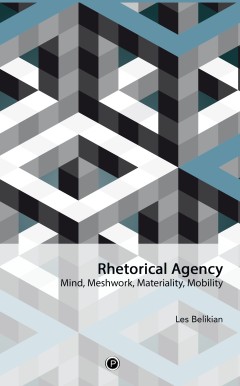
Rhetorical agency: mind, meshwork, materiality, mobility
In recent accounts of rhetoric’s storied productivity, commentators have implied, along systematically Kantian lines, albeit with the occasional protestation, that agency must be coextensive with subjectivity. But is that all there is (to 2,500 years’ worth of hypothesizing about the ways in which communication might promote social change)? Les Belikian’s answer, drawing not only on tradi…
- Edition
- -
- ISBN/ISSN
- 9781947447240
- Collation
- 206 p.; 22 cm.
- Series Title
- -
- Call Number
- 410 BEL r
 Computer Science, Information & General Works
  Philosophy & Psychology
  Religion
  Social Sciences
  Language
  Pure Science
  Applied Sciences
  Art & Recreation
  Literature
  History & Geography