Filter by
# Debug Box
/var/www/htdocs/pustaka-digital/lib/SearchEngine/SearchBiblioEngine.php:688 "Search Engine Debug 🔎 🪲"
Engine Type ⚙️: "SLiMS\SearchEngine\SearchBiblioEngine"
SQL ⚙️: array:2 [
  "count" => "select count(sb.biblio_id) from search_biblio as sb where sb.opac_hide=0 and ((match (sb.author) against (:author in boolean mode)))"
  "query" => "select sb.biblio_id, sb.title, sb.author, sb.topic, sb.image, sb.isbn_issn, sb.publisher, sb.publish_place, sb.publish_year, sb.labels, sb.input_date, sb.edition, sb.collation, sb.series_title, sb.call_number from search_biblio as sb where sb.opac_hide=0 and ((match (sb.author) against (:author in boolean mode))) order by sb.last_update desc limit 10 offset 0"
]
Bind Value ⚒️: array:1 [
  ":author" => "'+Fuhse, Antonie'"
]

MATERIAL CULTURE AND (FORCED) MIGRATION : materializing the transient
Material Culture and (Forced) Migration argues that materiality is a fundamental dimension of migration. During journeys of migration, people take things with them, or they lose, find and engage things along the way. Movements themselves are framed by objects such as borders, passports, tents, camp infrastructures, boats and mobile phones. This volume brings together chapters that are based on …
- Edition
- -
- ISBN/ISSN
- 9781800081604
- Collation
- xvii, 372 p. ill;
- Series Title
- -
- Call Number
- 304.8 MAT F
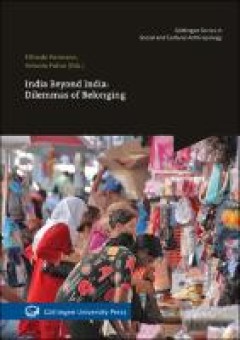
India beyond India : dilemmas of belonging
People’s transnational mobilities, their activities to build homes in their countries of residence and their connectivities have resulted in multiplicities of belonging to encountered, imagined and represented communities operating within various political contexts. Migrants and their descendants labor to form and transform relations with their country of origin and of residence. People who s…
- Edition
- -
- ISBN/ISSN
- 9783863953614
- Collation
- 214p.
- Series Title
- -
- Call Number
- 305.8914 IND h
 Computer Science, Information & General Works
  Philosophy & Psychology
  Religion
  Social Sciences
  Language
  Pure Science
  Applied Sciences
  Art & Recreation
  Literature
  History & Geography