Filter by
Found 1 from your keywords: author=Hegarty, Seamus
# Debug Box
/var/www/htdocs/pustaka-digital/lib/SearchEngine/SearchBiblioEngine.php:688 "Search Engine Debug 🔎 🪲"
Engine Type ⚙️: "SLiMS\SearchEngine\SearchBiblioEngine"
SQL ⚙️: array:2 [
  "count" => "select count(sb.biblio_id) from search_biblio as sb where sb.opac_hide=0 and ((match (sb.author) against (:author in boolean mode)))"
  "query" => "select sb.biblio_id, sb.title, sb.author, sb.topic, sb.image, sb.isbn_issn, sb.publisher, sb.publish_place, sb.publish_year, sb.labels, sb.input_date, sb.edition, sb.collation, sb.series_title, sb.call_number from search_biblio as sb where sb.opac_hide=0 and ((match (sb.author) against (:author in boolean mode))) order by sb.last_update desc limit 10 offset 0"
]
Bind Value ⚒️: array:1 [
  ":author" => "'+Hegarty, Seamus'"
]
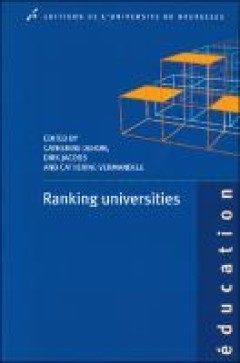
Ranking universities
University rankings are ‘hot’. Some universities, policy makers and journalists seem to take them quite seriously. At the same time, however, they are also fiercely criticized. The best known worldwide rankings tend, for instance, to have a strong anglo-saxon bias and tend to give insufficient valorisation to human sciences.
- Edition
- -
- ISBN/ISSN
- 9782800414416
- Collation
- X, 120 p.
- Series Title
- -
- Call Number
- 378 HAL r
 Computer Science, Information & General Works
  Philosophy & Psychology
  Religion
  Social Sciences
  Language
  Pure Science
  Applied Sciences
  Art & Recreation
  Literature
  History & Geography