Filter by
# Debug Box
/var/www/htdocs/pustaka-digital/lib/SearchEngine/SearchBiblioEngine.php:688 "Search Engine Debug 🔎 🪲"
Engine Type ⚙️: "SLiMS\SearchEngine\SearchBiblioEngine"
SQL ⚙️: array:2 [
  "count" => "select count(sb.biblio_id) from search_biblio as sb where sb.opac_hide=0 and ((match (sb.author) against (:author in boolean mode)))"
  "query" => "select sb.biblio_id, sb.title, sb.author, sb.topic, sb.image, sb.isbn_issn, sb.publisher, sb.publish_place, sb.publish_year, sb.labels, sb.input_date, sb.edition, sb.collation, sb.series_title, sb.call_number from search_biblio as sb where sb.opac_hide=0 and ((match (sb.author) against (:author in boolean mode))) order by sb.last_update desc limit 10 offset 0"
]
Bind Value ⚒️: array:1 [
  ":author" => "'+Kimura, Aya Hirata'"
]
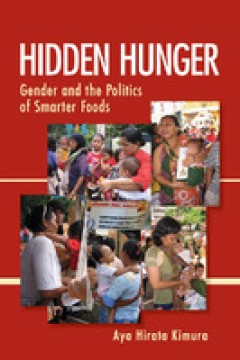
Hidden Hunger : Gender and the Politics of Smarter Foods
For decades, NGOs targeting world hunger focused on ensuring that adequate quantities of food were being sent to those in need. In the 1990s, the international food policy community turned its focus to the “hidden hunger” of micronutrient deficiencies, a problem that resulted in two scientific solutions: fortification, the addition of nutrients to processed foods, and biofortification, the …
- Edition
- 25
- ISBN/ISSN
- 9780801467691
- Collation
- xiii, 219 p . : ill
- Series Title
- -
- Call Number
- 362.19639009598 AYA h

Hidden hunger: gender and the politics of smarter foods
For decades, NGOs targeting world hunger focused on ensuring that adequate quantities of food were being sent to those in need. In the 1990s, the international food policy community turned its focus to the “hidden hunger” of micronutrient deficiencies, a problem that resulted in two scientific solutions: fortification, the addition of nutrients to processed foods, and biofortification, the …
- Edition
- -
- ISBN/ISSN
- 9780801467684
- Collation
- xiv, 226p.: ill.
- Series Title
- -
- Call Number
- 362.19639009598 KIM h
 Computer Science, Information & General Works
  Philosophy & Psychology
  Religion
  Social Sciences
  Language
  Pure Science
  Applied Sciences
  Art & Recreation
  Literature
  History & Geography