Filter by
# Debug Box
/var/www/htdocs/pustaka-digital/lib/SearchEngine/SearchBiblioEngine.php:688 "Search Engine Debug 🔎 🪲"
Engine Type ⚙️: "SLiMS\SearchEngine\SearchBiblioEngine"
SQL ⚙️: array:2 [
  "count" => "select count(sb.biblio_id) from search_biblio as sb where sb.opac_hide=0 and ((match (sb.author) against (:author in boolean mode)))"
  "query" => "select sb.biblio_id, sb.title, sb.author, sb.topic, sb.image, sb.isbn_issn, sb.publisher, sb.publish_place, sb.publish_year, sb.labels, sb.input_date, sb.edition, sb.collation, sb.series_title, sb.call_number from search_biblio as sb where sb.opac_hide=0 and ((match (sb.author) against (:author in boolean mode))) order by sb.last_update desc limit 10 offset 10"
]
Bind Value ⚒️: array:1 [
  ":author" => "'+Lindén, Carl'"
]
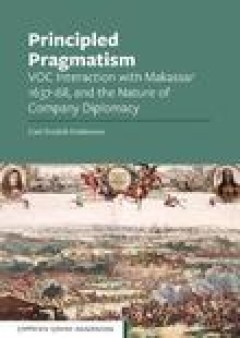
Principled pragmatism : VOC interaction with Makassar 1637-68 and the Nature …
In this study of the Dutch East India Company the author uses the Company’s seventeenth century diplomatic interaction with the trading Sultanate of Macassar, on the southwestern tip of present day Sulawesi, as a case in cross cultural diplomacy. The author argues that the outlook of the Company’s agents both home and overseas was pragmatic, as was the nature of the solutions to the problem…
- Edition
- -
- ISBN/ISSN
- 9788202566609
- Collation
- 375 p.
- Series Title
- -
- Call Number
- 959.8 FRE p

Social question in the twenty-first century: a global view
Want, disease, ignorance, squalor, and idleness: first recognized together in mid-nineteenth-century Europe, these are the focus of the Social Question. In 1942 William Beveridge called them the “giant evils” while diagnosing the crises produced by the emergence of industrial society. More recently, during the final quarter of the twentieth century, the global spread of neoliberal policies …
- Edition
- -
- ISBN/ISSN
- 9780520302402
- Collation
- xii, 266 pages : illustrations, maps ; 23 cm
- Series Title
- -
- Call Number
- 306.3 BRE s

Research in multicultural education : from the margins to the mainstream
First published in 1992. Routledge is an imprint of Taylor & Francis, an informa company.
- Edition
- -
- ISBN/ISSN
- 9781135388683
- Collation
- vi, 267p. : ill.
- Series Title
- -
- Call Number
- 370.19341072 RES r
 Computer Science, Information & General Works
  Philosophy & Psychology
  Religion
  Social Sciences
  Language
  Pure Science
  Applied Sciences
  Art & Recreation
  Literature
  History & Geography