Filter by
Found 1 from your keywords: author=Mole, Megen
# Debug Box
/var/www/htdocs/pustaka-digital/lib/SearchEngine/SearchBiblioEngine.php:688 "Search Engine Debug 🔎 🪲"
Engine Type ⚙️: "SLiMS\SearchEngine\SearchBiblioEngine"
SQL ⚙️: array:2 [
  "count" => "select count(sb.biblio_id) from search_biblio as sb where sb.opac_hide=0 and ((match (sb.author) against (:author in boolean mode)))"
  "query" => "select sb.biblio_id, sb.title, sb.author, sb.topic, sb.image, sb.isbn_issn, sb.publisher, sb.publish_place, sb.publish_year, sb.labels, sb.input_date, sb.edition, sb.collation, sb.series_title, sb.call_number from search_biblio as sb where sb.opac_hide=0 and ((match (sb.author) against (:author in boolean mode))) order by sb.last_update desc limit 10 offset 0"
]
Bind Value ⚒️: array:1 [
  ":author" => "'+Mole, Megen'"
]
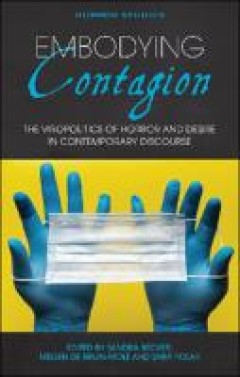
Embodying contagion: the Viropolitics of horror and desire in contemporary di…
From Outbreak to The Walking Dead, apocalyptic narratives of infection, contagion and global pandemic are an inescapable part of twenty-first-century popular culture. Yet these fears and fantasies are too virulent to be simply quarantined within fictional texts. The vocabulary and metaphors of outbreak narratives have permeated how news media, policymakers and the general public view the real w…
- Edition
- -
- ISBN/ISSN
- 9781786836915
- Collation
- xviii, 303p.
- Series Title
- Horror Studies
- Call Number
- 809.933561 EMB e
 Computer Science, Information & General Works
  Philosophy & Psychology
  Religion
  Social Sciences
  Language
  Pure Science
  Applied Sciences
  Art & Recreation
  Literature
  History & Geography