Filter by
Found 1 from your keywords: author=Punathambekar, Aswin
# Debug Box
/var/www/htdocs/pustaka-digital/lib/SearchEngine/SearchBiblioEngine.php:688 "Search Engine Debug 🔎 🪲"
Engine Type ⚙️: "SLiMS\SearchEngine\SearchBiblioEngine"
SQL ⚙️: array:2 [
  "count" => "select count(sb.biblio_id) from search_biblio as sb where sb.opac_hide=0 and ((match (sb.author) against (:author in boolean mode)))"
  "query" => "select sb.biblio_id, sb.title, sb.author, sb.topic, sb.image, sb.isbn_issn, sb.publisher, sb.publish_place, sb.publish_year, sb.labels, sb.input_date, sb.edition, sb.collation, sb.series_title, sb.call_number from search_biblio as sb where sb.opac_hide=0 and ((match (sb.author) against (:author in boolean mode))) order by sb.last_update desc limit 10 offset 0"
]
Bind Value ⚒️: array:1 [
  ":author" => "'+Punathambekar, Aswin'"
]
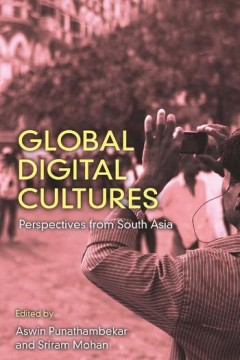
Global digital cultures : perspectives from South Asia
Digital media histories are part of a global network, and South Asia is a key nexus in shaping the trajectory of digital media in the twenty-first century. Digital platforms like Facebook, WhatsApp, and others are deeply embedded in the daily lives of millions of people around the world, shaping how people engage with others as kin, as citizens, and as consumers. Moving away from Anglo-Americ…
- Edition
- -
- ISBN/ISSN
- 9780472131402
- Collation
- viii, 317p. : ill.
- Series Title
- -
- Call Number
- 302.2310954
 Computer Science, Information & General Works
  Philosophy & Psychology
  Religion
  Social Sciences
  Language
  Pure Science
  Applied Sciences
  Art & Recreation
  Literature
  History & Geography