Filter by
Found 1 from your keywords: author=Sarkar, Mahua
# Debug Box
/var/www/htdocs/pustaka-digital/lib/SearchEngine/SearchBiblioEngine.php:688 "Search Engine Debug 🔎 🪲"
Engine Type ⚙️: "SLiMS\SearchEngine\SearchBiblioEngine"
SQL ⚙️: array:2 [
  "count" => "select count(sb.biblio_id) from search_biblio as sb where sb.opac_hide=0 and ((match (sb.author) against (:author in boolean mode)))"
  "query" => "select sb.biblio_id, sb.title, sb.author, sb.topic, sb.image, sb.isbn_issn, sb.publisher, sb.publish_place, sb.publish_year, sb.labels, sb.input_date, sb.edition, sb.collation, sb.series_title, sb.call_number from search_biblio as sb where sb.opac_hide=0 and ((match (sb.author) against (:author in boolean mode))) order by sb.last_update desc limit 10 offset 0"
]
Bind Value ⚒️: array:1 [
  ":author" => "'+Sarkar, Mahua'"
]
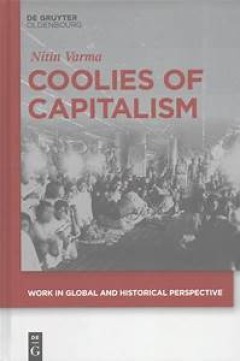
Coolies of capitalism : assam tea and the making of coolie labour
Coolie labour was often proclaimed as a deliberate compromise straddling the regimes of the past (slave labour) and the future (free labour). In the late 1850s, the locals were replaced by labourers imported from outside the province who were designated "coolies". Qualifying this framework of transition and introduction, this study makes a case for the "production" of coolie labour in the histo…
- Edition
- -
- ISBN/ISSN
- 9783110463170
- Collation
- 242p. : ill
- Series Title
- -
- Call Number
- 331.090954 NIT c
 Computer Science, Information & General Works
  Philosophy & Psychology
  Religion
  Social Sciences
  Language
  Pure Science
  Applied Sciences
  Art & Recreation
  Literature
  History & Geography