Filter by
# Debug Box
/var/www/htdocs/pustaka-digital/lib/SearchEngine/SearchBiblioEngine.php:688 "Search Engine Debug 🔎 🪲"
Engine Type ⚙️: "SLiMS\SearchEngine\SearchBiblioEngine"
SQL ⚙️: array:2 [
  "count" => "select count(sb.biblio_id) from search_biblio as sb where sb.opac_hide=0 and ((match (sb.author) against (:author in boolean mode)))"
  "query" => "select sb.biblio_id, sb.title, sb.author, sb.topic, sb.image, sb.isbn_issn, sb.publisher, sb.publish_place, sb.publish_year, sb.labels, sb.input_date, sb.edition, sb.collation, sb.series_title, sb.call_number from search_biblio as sb where sb.opac_hide=0 and ((match (sb.author) against (:author in boolean mode))) order by sb.last_update desc limit 10 offset 0"
]
Bind Value ⚒️: array:1 [
  ":author" => "'+Shea, Eiren'"
]

Mongol Court Dress, Identity Formation, and Global Exchange
The Mongol period (1206-1368) marked a major turning point of exchange – culturally, politically, and artistically – across Eurasia. The wide-ranging international exchange that occurred during the Mongol period is most apparent visually through the inclusion of Mongol motifs in textile, paintings, ceramics, and metalwork, among other media. Eiren Shea investigates how a group of newly-conf…
- Edition
- -
- ISBN/ISSN
- 9781032238432
- Collation
- xvii,207 p
- Series Title
- -
- Call Number
- 391.00951 HEA M
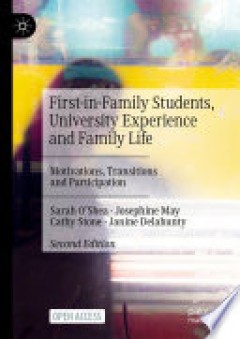
First-in-family students, university experience and family life : motivations…
This open access book, now in its second edition, offers a comprehensive overview of the experiences of First in Family (FiF) or first-generation students in higher education. It draws upon narratives of students and their family members and spans the entire university student life cycle (pre-entry, commencement, progression and graduation) with a focus on specific cohorts including mature-aged…
- Edition
- -
- ISBN/ISSN
- 9783031344510
- Collation
- XXIII, 294 p
- Series Title
- -
- Call Number
- 378.198 SAR f

Reimagining the higher education student : constructing and contesting identi…
Drawing on the perspectives of scholars and researchers from around the world, this book challenges dominant constructions of higher education students. Given the increasing number and diversity of such students, the book offers a timely discussion of the implicit and sometimes subtle ways that they are characterised or defined. Topics vary from the ways that curriculum designers ‘imagine’ …
- Edition
- -
- ISBN/ISSN
- 9780367854171
- Collation
- xix, 249 p. : bnw, ill.
- Series Title
- Research into higher education
- Call Number
- 378.198 BRO r
Representation in cognitive science
Nicholas Shea.
- Edition
- First edition.
- ISBN/ISSN
- 9780198812883 (hbk.)
- Collation
- xi, 292 pages : illustrations ; 24 cm
- Series Title
- -
- Call Number
- -
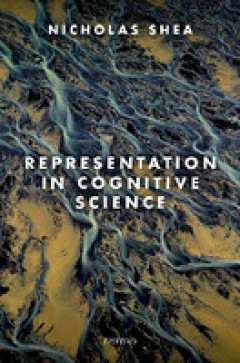
Representation in cognitive science
"Our thoughts are meaningful. We think about things in the outside world; how can that be so? This is one of the deepest questions in contemporary philosophy. Ever since the 'cognitive revolution', states with meaning-mental representations-have been the key explanatory construct of the cognitive sciences. But there is still no widely accepted theory of how mental representations get their mean…
- Edition
- First edition.
- ISBN/ISSN
- 9780198812883
- Collation
- xi, 292 pages : illustrations ; 24 cm
- Series Title
- -
- Call Number
- 153 SHE r
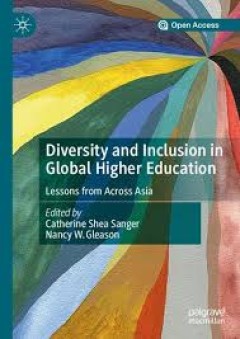
Diversity and Inclusion in Global Higher Education Lessons from Across Asia
- Edition
- -
- ISBN/ISSN
- 9789811516283
- Collation
- -
- Series Title
- -
- Call Number
- 378.008 SAN d
- Edition
- -
- ISBN/ISSN
- 9789811516283
- Collation
- -
- Series Title
- -
- Call Number
- 378.008 SAN d
 Computer Science, Information & General Works
  Philosophy & Psychology
  Religion
  Social Sciences
  Language
  Pure Science
  Applied Sciences
  Art & Recreation
  Literature
  History & Geography