Filter by
Found 1 from your keywords: author=Woldan, Alois
# Debug Box
/var/www/htdocs/pustaka-digital/lib/SearchEngine/SearchBiblioEngine.php:688 "Search Engine Debug 🔎 🪲"
Engine Type ⚙️: "SLiMS\SearchEngine\SearchBiblioEngine"
SQL ⚙️: array:2 [
  "count" => "select count(sb.biblio_id) from search_biblio as sb where sb.opac_hide=0 and ((match (sb.author) against (:author in boolean mode)))"
  "query" => "select sb.biblio_id, sb.title, sb.author, sb.topic, sb.image, sb.isbn_issn, sb.publisher, sb.publish_place, sb.publish_year, sb.labels, sb.input_date, sb.edition, sb.collation, sb.series_title, sb.call_number from search_biblio as sb where sb.opac_hide=0 and ((match (sb.author) against (:author in boolean mode))) order by sb.last_update desc limit 10 offset 0"
]
Bind Value ⚒️: array:1 [
  ":author" => "'+Woldan, Alois'"
]
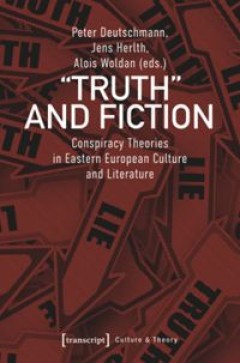
"Truth" and fiction : conspiracy theories in Eastern European culture and lit…
Several of the most prolific and influential conspiracy theories originated in Eastern Europe. The efficacy of conspiracy narratives can be observed in recent developments in Poland or with regard to the wars waged in eastern Ukraine and in former Yugoslavia. This volume analyses the history behind this widespread phenomenon as well as its relationship with representations of the present in Eas…
- Edition
- -
- ISBN/ISSN
- 9783839446508
- Collation
- 381 p.
- Series Title
- Edition Kulturwissenschaft, 193
- Call Number
- 809.93355 TRU t
 Computer Science, Information & General Works
  Philosophy & Psychology
  Religion
  Social Sciences
  Language
  Pure Science
  Applied Sciences
  Art & Recreation
  Literature
  History & Geography