Filter by
# Debug Box
/var/www/htdocs/pustaka-digital/lib/SearchEngine/SearchBiblioEngine.php:688 "Search Engine Debug 🔎 🪲"
Engine Type ⚙️: "SLiMS\SearchEngine\SearchBiblioEngine"
SQL ⚙️: array:2 [
  "count" => "select count(sb.biblio_id) from search_biblio as sb where sb.opac_hide=0 and (sb.call_number LIKE :callnumber)"
  "query" => "select sb.biblio_id, sb.title, sb.author, sb.topic, sb.image, sb.isbn_issn, sb.publisher, sb.publish_place, sb.publish_year, sb.labels, sb.input_date, sb.edition, sb.collation, sb.series_title, sb.call_number from search_biblio as sb where sb.opac_hide=0 and (sb.call_number LIKE :callnumber) order by sb.last_update desc limit 10 offset 120"
]
Bind Value ⚒️: array:1 [
  ":callnumber" => "9%"
]
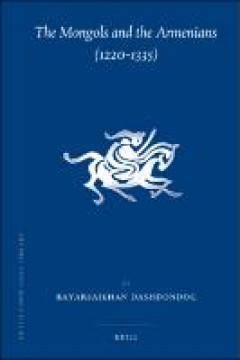
The Mongols and the Armenians (1220-1335)
In the thirteenth century, the Armenians of Greater Armenia and of the Armenian Kingdom in Cilicia were invaded by Mongol nomads of the Inner Asian steppe. The ensuing Mongol-Armenian relations were varied. The Greater Armenians became subjects of the Mongol Empire, whereas the Cilician Armenians, by entering into vassalage, became allies and furthered the Mongol conquests. In order to enhance …
- Edition
- -
- ISBN/ISSN
- 9789004186354
- Collation
- xiii, 267 p. : ill
- Series Title
- -
- Call Number
- 956.62014 DAS t
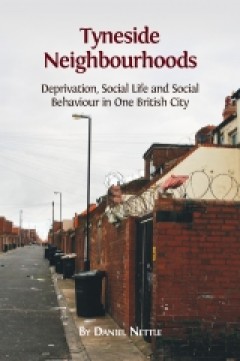
Tyneside neighbourhoods : deprivation, social life and social behaviour in on…
Nettle’s book presents the results of five years of comparative ethnographic fieldwork in two different neighbourhoods of the same British city, Newcastle upon Tyne. The neighbourhoods are only a few kilometres apart, yet whilst one is relatively affluent, the other is amongst the most economically deprived in the UK. Tyneside Neighbourhoods uses multiple research methods to explore social re…
- Edition
- -
- ISBN/ISSN
- 9781783741908
- Collation
- 148 p. ; ill
- Series Title
- -
- Call Number
- 942.876 NET t

A fleet street in every town: the provincial press in England, 1855-1900
At the heart of Victorian culture was the local weekly newspaper. More popular than books, more widely read than the London papers, the local press was a national phenomenon. This book redraws the Victorian cultural map, shifting our focus away from one centre, London, and towards the many centres of the provinces. It offers a new paradigm in which place, and a sense of place, are vital to the …
- Edition
- -
- ISBN/ISSN
- 9781783745616
- Collation
- 455 p. : ill. : ind. ; 24 cm
- Series Title
- -
- Call Number
- 941.081 HOB a

Tolerance : the beacon of the enlightenment
This is a century of political and cultural imperialism, of wars about borders and control of resources, of world-wide trade and profit based on worldwide exploitation. It is also a century of revolution, and of fierce debate about rights and laws, about the right to follow a religion or to reject it, about policing and its limits. It is a century of violence, and it provokes violent reactions.…
- Edition
- -
- ISBN/ISSN
- 9781783742073
- Collation
- 130 p.
- Series Title
- -
- Call Number
- 944.034.

Sweden, Japan, and the long Second World War : 1931-1945
We thank Ekman & Co AB and Gadelius Holding Ltd for their kind and generous support, making this research available online for free. Lottaz and Ottosson explore the intricate relationship between neutral Sweden and Imperial Japan during the latter’s 15 years of warfare in Asia and in the Pacific. While Sweden’s relationship with European Axis powers took place under the premise of existenti…
- Edition
- -
- ISBN/ISSN
- 9781003182061
- Collation
- xiv, 235 p. : ill
- Series Title
- -
- Call Number
- 940.53254850952 LOT s

Holocaust Education : Contemporary challenges and controversies
Teaching and learning about the Holocaust is central to school curriculums in many parts of the world. As a field for discourse and a body of practice, it is rich, multidimensional and innovative. But the history of the Holocaust is complex and challenging, and can render teaching it a complex and daunting area of work. Drawing on landmark research into teaching practices and students’ knowle…
- Edition
- -
- ISBN/ISSN
- 9781787355699
- Collation
- 234p. ; ill.
- Series Title
- -
- Call Number
- 940.5318071 STU h

Spain, China and Japan in Manila, 1571-1644 : local comparisons and global co…
This book offers a new perspective on the connected histories of Spain, China, and Japan as they emerged and developed following Manila’s foundation as the capital of the Spanish Philippines in 1571. Examining a wealth of multilingual primary sources, Birgit Tremml-Werner shows that crosscultural encounters not only shaped Manila’s development as a “Eurasian” port city, but also had pro…
- Edition
- -
- ISBN/ISSN
- 9789048526819
- Collation
- viii, 365 p.
- Series Title
- -
- Call Number
- 959.91602 TRE s
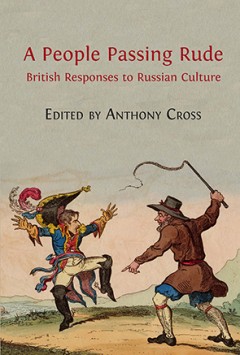
A people passing rude: British responses to Russian culture
Described by the sixteenth-century English poet George Turbervile as "a people passing rude, to vices vile inclin’d", the Russians waited some three centuries before their subsequent cultural achievements—in music, art and particularly literature—achieved widespread recognition in Britain. The essays in this stimulating collection attest to the scope and variety of Russia’s influence…
- Edition
- -
- ISBN/ISSN
- 9781909254121
- Collation
- xvi, 331 p.: illustrations
- Series Title
- -
- Call Number
- 947.084 CRO a

Imperial genus : the formation and limits of the human in modern Korea and Japan
"Imperial Genus begins with the turn to world culture and ideas of the generally human in Japan’s cultural policy in Korea in 1919. How were concepts of the human’s genus‑being operative in the discourses of the Japanese empire? How did they inform the imagination and representation of modernity in colonial Korea? Travis Workman delves into these questions through texts in philosophy, lit…
- Edition
- -
- ISBN/ISSN
- 9780520964198
- Collation
- vii, 307 p. : ill,
- Series Title
- -
- Call Number
- 951.903 WOR i

Mary Warnock : ethics, education and public policy in post-war Britain
This biography illuminates the life and thought of Baroness Mary Warnock, whose active years spanned the second half of the twentieth century, a period during which opportunities for middle-class women rapidly and vastly improved. Warnock was described as ‘probably the most celebrated philosopher in Britain.’ She began her career as an Oxford University philosophy don and went on to beco…
- Edition
- -
- ISBN/ISSN
- 9781800643406
- Collation
- viii, 350 p
- Series Title
- -
- Call Number
- 941.082092 GRA m
 Computer Science, Information & General Works
  Philosophy & Psychology
  Religion
  Social Sciences
  Language
  Pure Science
  Applied Sciences
  Art & Recreation
  Literature
  History & Geography