Filter by
# Debug Box
/var/www/htdocs/pustaka-digital/lib/SearchEngine/SearchBiblioEngine.php:688 "Search Engine Debug 🔎 🪲"
Engine Type ⚙️: "SLiMS\SearchEngine\SearchBiblioEngine"
SQL ⚙️: array:2 [
  "count" => "select count(sb.biblio_id) from search_biblio as sb where sb.opac_hide=0 and ((match (sb.topic) against (:subject in boolean mode)))"
  "query" => "select sb.biblio_id, sb.title, sb.author, sb.topic, sb.image, sb.isbn_issn, sb.publisher, sb.publish_place, sb.publish_year, sb.labels, sb.input_date, sb.edition, sb.collation, sb.series_title, sb.call_number from search_biblio as sb where sb.opac_hide=0 and ((match (sb.topic) against (:subject in boolean mode))) order by sb.last_update desc limit 10 offset 0"
]
Bind Value ⚒️: array:1 [
  ":subject" => "'+\"Russian literature\"'"
]
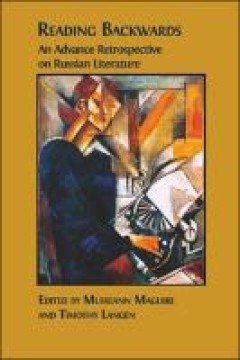
Reading backwards: an advance retrospective on Russian literature
"This edited volume employs the paradoxical notion of ‘anticipatory plagiarism’—developed in the 1960s by the ‘Oulipo’ group of French writers and thinkers—as a mode for reading Russian literature. Reversing established critical approaches to the canon and literary influence, its contributors ask us to consider how reading against linear chronologies can elicit fascinating new patte…
- Edition
- -
- ISBN/ISSN
- 9781800641211
- Collation
- 302 p.: colour, ill.
- Series Title
- -
- Call Number
- 891.709 MAG r

"Truth" and fiction : conspiracy theories in Eastern European culture and lit…
Several of the most prolific and influential conspiracy theories originated in Eastern Europe. The efficacy of conspiracy narratives can be observed in recent developments in Poland or with regard to the wars waged in eastern Ukraine and in former Yugoslavia. This volume analyses the history behind this widespread phenomenon as well as its relationship with representations of the present in Eas…
- Edition
- -
- ISBN/ISSN
- 9783839446508
- Collation
- 381 p.
- Series Title
- Edition Kulturwissenschaft, 193
- Call Number
- 809.93355 TRU t

The literariness of media art
“Language can be this incredibly forceful material—there’s something about it where if you can strip away its history, get to the materiality of it, it can rip into you like claws” (Hill in Vischer 1995, 11). This arresting image by media artist Gary Hill evokes the nearly physical force of language to hold recipients in its grip. That power seems to lie in the material of language itse…
- Edition
- -
- ISBN/ISSN
- 9781138091511
- Collation
- x, 320p. : ill.
- Series Title
- -
- Call Number
- 891.709004 BEN l
 Computer Science, Information & General Works
  Philosophy & Psychology
  Religion
  Social Sciences
  Language
  Pure Science
  Applied Sciences
  Art & Recreation
  Literature
  History & Geography