Filter by
# Debug Box
/var/www/htdocs/pustaka-digital/lib/SearchEngine/SearchBiblioEngine.php:688 "Search Engine Debug 🔎 🪲"
Engine Type ⚙️: "SLiMS\SearchEngine\SearchBiblioEngine"
SQL ⚙️: array:2 [
  "count" => "select count(sb.biblio_id) from search_biblio as sb where sb.opac_hide=0 and ((match (sb.topic) against (:subject in boolean mode)))"
  "query" => "select sb.biblio_id, sb.title, sb.author, sb.topic, sb.image, sb.isbn_issn, sb.publisher, sb.publish_place, sb.publish_year, sb.labels, sb.input_date, sb.edition, sb.collation, sb.series_title, sb.call_number from search_biblio as sb where sb.opac_hide=0 and ((match (sb.topic) against (:subject in boolean mode))) order by sb.last_update desc limit 10 offset 0"
]
Bind Value ⚒️: array:1 [
  ":subject" => "'+\"costume\"'"
]

Mongol Court Dress, Identity Formation, and Global Exchange
The Mongol period (1206-1368) marked a major turning point of exchange – culturally, politically, and artistically – across Eurasia. The wide-ranging international exchange that occurred during the Mongol period is most apparent visually through the inclusion of Mongol motifs in textile, paintings, ceramics, and metalwork, among other media. Eiren Shea investigates how a group of newly-conf…
- Edition
- -
- ISBN/ISSN
- 9781032238432
- Collation
- xvii,207 p
- Series Title
- -
- Call Number
- 391.00951 HEA M
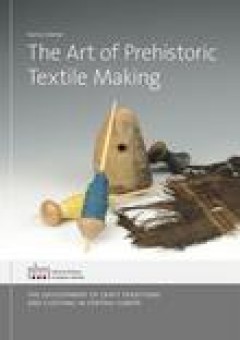
The Art of prehistoric textile making
Textiles, textile production and clothing were essentials of living in prehistory, locked into the system of society at every level – social, economic and even religious. Textile crafts not only produced essential goods for everyday use, most notably clothing, but also utilitarian objects as well as representative and luxury items. Prehistoric clothing and their role in identity creation for …
- Edition
- -
- ISBN/ISSN
- 9783902421944
- Collation
- x, 536p.: ill.
- Series Title
- -
- Call Number
- 677 GRO a
 Computer Science, Information & General Works
  Philosophy & Psychology
  Religion
  Social Sciences
  Language
  Pure Science
  Applied Sciences
  Art & Recreation
  Literature
  History & Geography